
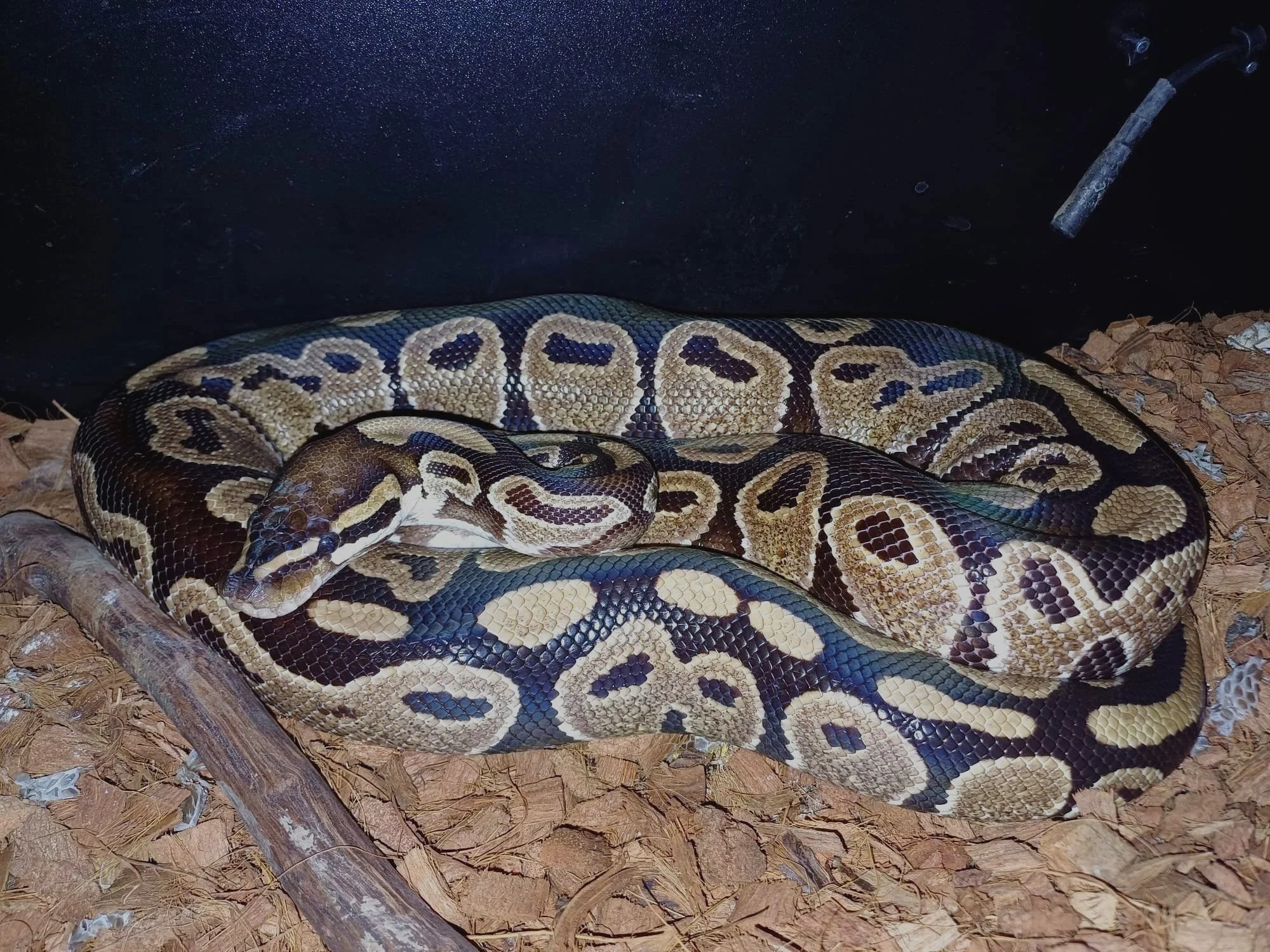
Royal Python
Python regius
A quiet, heavy-bodied snake with specific heat, humidity and security needs. With thoughtful care, a Royal Python can be a companion for more than 20 years.
INFORMATION CHECKED: AUGUST 2026
QUICK FACTS
• Adult size: up to around 150 cm
• Lifespan: commonly 20+ years
• Warm end: 30–32°C
• Cool end: 24–26°C
• Humidity: normally 50–60%
• UVB: a gradient from UVI 1.0 down to zero
BEFORE YOU BEGIN
Royal Pythons are generally crepuscular and appreciate cover, predictable routines and minimal disturbance. Set up and test the enclosure before the snake arrives. Food refusal can occur, but it should never be dismissed when accompanied by weight loss, breathing changes or other symptoms.
ENCLOSURE
The vivarium must allow the snake to stretch out fully. Its width and height should each be at least one third of the snake’s body length. Use a secure, well-ventilated enclosure with several snug hides, including warm- and cool-side options. Provide sturdy branches, foliage and other safe enrichment.
HEATING & LIGHTING
Maintain a warm end of 30–32°C and a cool end of 24–26°C. Every heat source must be guarded where necessary and controlled by a suitable thermostat. Check temperatures daily using reliable digital thermometers. Provide a day/night cycle and low-level UVB, with a gradient from UVI 1.0 to shaded areas at zero.
HUMIDITY
Keep general humidity at 50–60%. A temporary increase—up to around 80%—or a humid hide can support a clean shed, but the enclosure should not remain wet or poorly ventilated. Use a digital hygrometer and remove damp, soiled substrate promptly.
SUBSTRATE, HIDES & ENRICHMENT
Choose a reptile-safe substrate that holds some humidity without staying waterlogged. Avoid strongly scented woods and very dusty products. Royal Pythons benefit from multiple tight-fitting hides, secure climbing branches, visual cover and occasional changes in enrichment.
FEEDING & WATER
Offer appropriately sized, fully thawed dead prey. Healthy adults are commonly fed every 7–14 days, adjusted for prey weight, age and body condition. Avoid overfeeding and monitor weight. Supply fresh drinking water every day in a stable bowl.
HANDLING
Allow a new snake to settle before regular handling. Support the whole body, keep early sessions short and avoid handling for at least 48 hours after feeding. Reduce handling during shedding, illness or periods of marked stress. Wash hands before and after contact.
WHEN TO CALL A REPTILE VET
Seek prompt advice for noisy breathing, bubbles or discharge around the nose or mouth, mouth inflammation, unexplained weight loss, diarrhoea, mites, swelling, burns, repeated regurgitation or ongoing shedding problems. Persistent food refusal should be discussed with a reptile-experienced vet, especially if body condition changes.
SOURCE
RSPCA Royal Python Care Sheet:
This guide provides general husbandry information and is not a substitute for advice from a qualified reptile vet.