
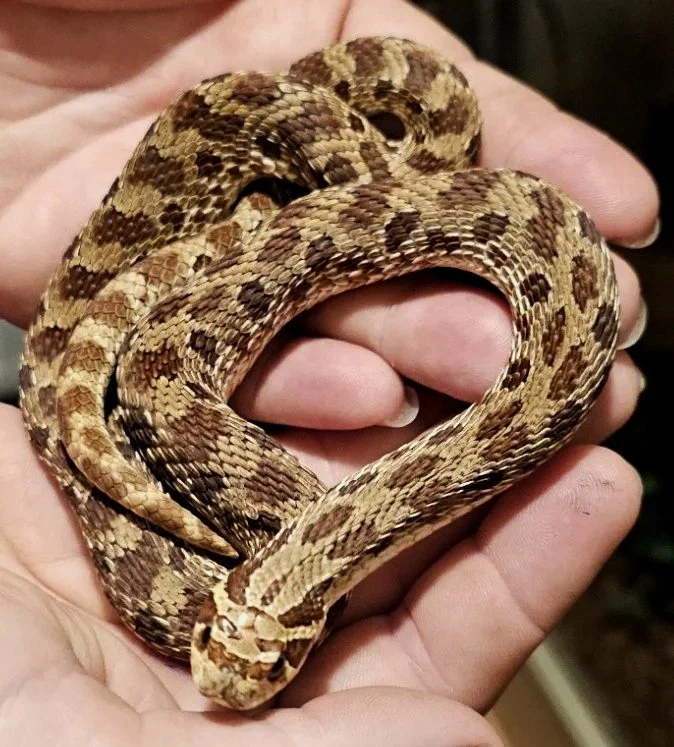
Western Hognose
Heterodon nasicus
A small, burrowing snake known for its upturned nose and dramatic defensive displays. Western Hognose snakes thrive when they have secure cover, deep substrate and a carefully controlled heat gradient.
INFORMATION CHECKED: AUGUST 2026
QUICK FACTS
• Adult size: around 36–61 cm
• Lifespan: commonly 12–18+ years
• Warm end: 31–33°C
• Cool end: 24–27°C
• Night temperature: around 21–24°C
• Humidity: 30–50%
• UVB: low-output 2–5% can be beneficial
BEFORE YOU BEGIN
Hognose snakes may hiss, flatten the neck, bluff-strike or play dead when frightened. These behaviours are defensive rather than a reason to handle more. Set up and test the enclosure in advance, and give a new snake time to settle.
ENCLOSURE
A secure, front-opening vivarium with good ventilation works well. Veterinary guidance gives a minimum adult floor area of about 60 × 30 cm, but a larger enriched enclosure is preferable when it provides plentiful cover. Supply at least two snug hides and enough substrate for the snake to bury itself completely.
HEATING & LIGHTING
Create a warm end of 31–33°C and a cool end of 24–27°C. Night temperatures can fall to around 21–24°C. Control every heat source with the correct thermostat and check temperatures daily with digital thermometers. Provide a 10–12 hour light cycle. Low-output UVB can support normal behaviour when the snake also has shaded areas.
HUMIDITY
Keep humidity between 30–50% and use a digital hygrometer. Provide a humid hide when the snake is preparing to shed rather than raising the whole enclosure excessively. Good ventilation and dry upper layers of substrate help prevent persistently damp conditions.
SUBSTRATE, HIDES & ENRICHMENT
Use several centimetres of safe, loose substrate suitable for burrowing. Avoid cedar, pine and very dusty materials. Add cork, low branches, foliage and visual barriers while keeping all heavy decorations secure so they cannot collapse when the snake digs.
FEEDING & WATER
Offer appropriately sized, fully thawed dead mice. Juveniles are commonly fed every 4–5 days and healthy adults every 7–10 days; adjust for age, prey size and body condition. Do not overfeed. Provide fresh drinking water every day in a stable, shallow bowl.
HANDLING
Let the snake settle before beginning short, calm handling sessions. Support the body, approach confidently without grabbing from above and return the snake if it shows prolonged defensive behaviour. Do not handle for at least 48 hours after feeding. Wash hands before and after contact.
WHEN TO CALL A REPTILE VET
Seek prompt advice for noisy or open-mouth breathing, bubbles around the nose or mouth, retained shed, unexplained weight loss, lethargy, swelling, burns, mites, mouth inflammation or persistent refusal to eat. Arrange a reptile-vet wellness examination after purchase and regular preventive checks thereafter.
SOURCE
Tree of Life Exotic Pet Medical Center — Western Hognose Snake Care:
treeoflifeexotics.vet/education-resource-center/for-clients/snakes/western-hognose-snake-care
This guide provides general husbandry information and is not a substitute for advice from a qualified reptile vet.